
low iron starphire glass
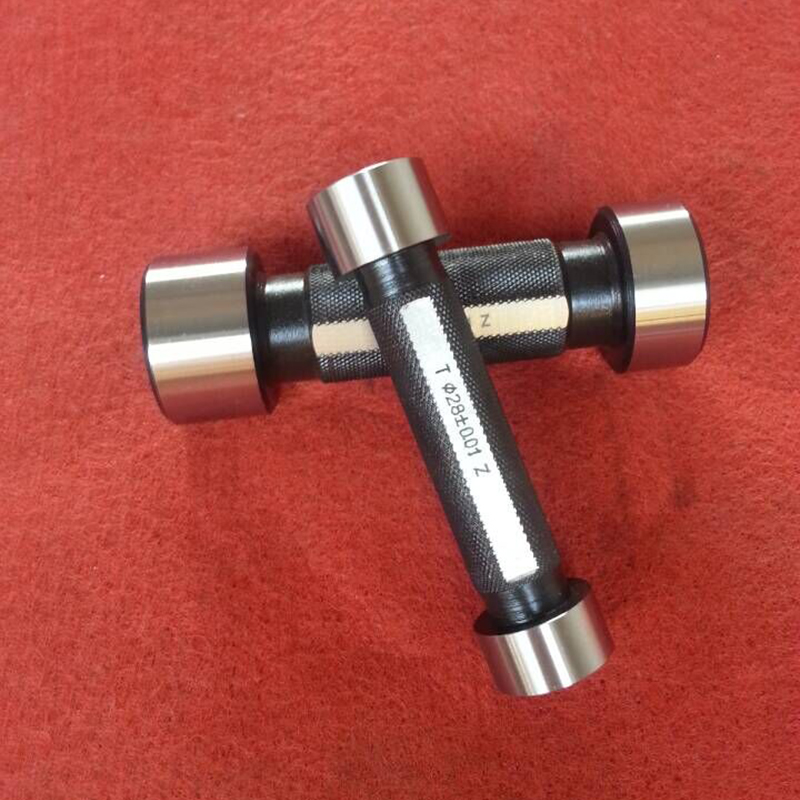
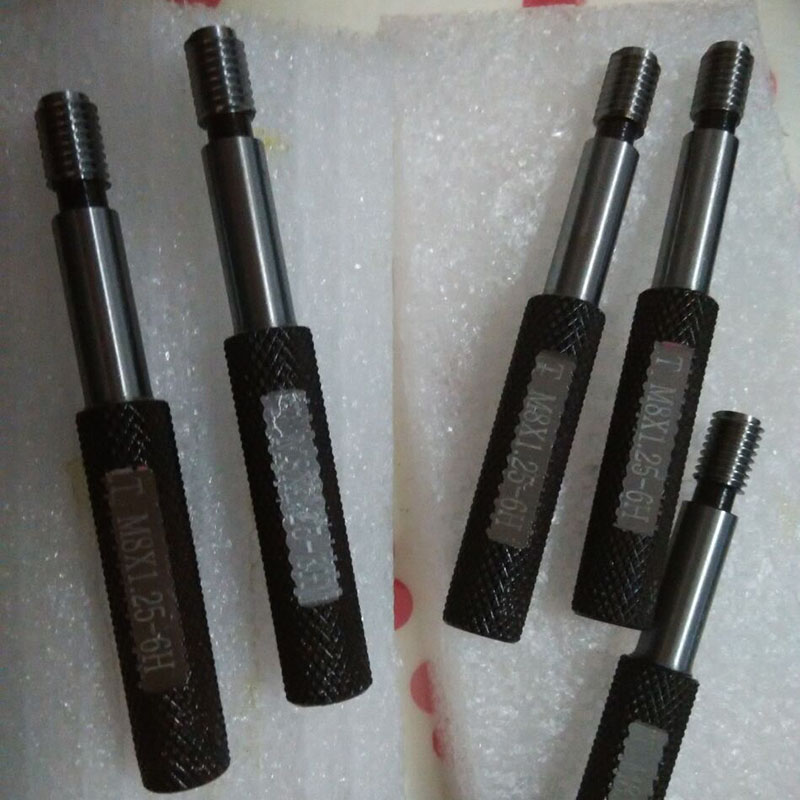
Understanding Plain Plug Gauge Standards In the world of manufacturing and quality assurance, precise measurement is paramount. Among the various tools used to ensure dimensional accuracy, plain plug gauges stand out for their simplicity and effectiveness. This article delves into the standards governing plain plug gauges, their applications, and their significance in quality control processes. What is a Plain Plug Gauge? A plain plug gauge is a cylindrical measuring tool used primarily to check the internal diameters of holes or the external diameters of cylindrical parts. They are characterized by their straightforward design, typically featuring a smooth, cylindrical body with a precisely defined diameter. The plug gauge is meant to either fit within a hole (go gauge) or not fit at all (no-go gauge). This binary assessment enables manufacturers to quickly verify whether a component meets specified tolerances. Importance of Standards The effectiveness of plain plug gauges is intrinsically linked to the standards established within the industry. These standards provide guidelines on the design, usage, and calibration of gauges, ensuring that they deliver reliable results across different applications. Without these standards, discrepancies in measurements could lead to faulty products, increased costs, and safety concerns. Key Standards for Plain Plug Gauges Several organizations and standards are prominent in the calibration of plain plug gauges. Among them, the most widely recognized is the International Organization for Standardization (ISO). ISO 5408 outlines the definitions and classifications of gauges, delivering a comprehensive framework for measuring instruments. Additionally, the American National Standards Institute (ANSI) provides guidelines that define tolerances and dimensions specifically for plug gauges, ensuring compatibility with a broad range of manufacturing processes. These standards address crucial aspects, including material properties, temperature stability, and wear resistance. For instance, the materials used in constructing plain plug gauges—often high-carbon steel or carbide—are specified to ensure durability and precision. Proper calibration methods are also outlined, which are essential to maintain the accuracy of the gauges over time. plain plug gauge standard Applications in Manufacturing Plain plug gauges are employed across various industries, including automotive, aerospace, and electronics. Their applications range from checking the fit of bearings and shafts to ensuring the proper alignment of holes in assemblies. By verifying that parts meet strict tolerances, manufacturers can avoid assembly issues and product failures down the line. Moreover, plain plug gauges facilitate the statistical process control (SPC) in manufacturing. By regularly using gauges to sample parts from a production line, manufacturers can make real-time adjustments to processes, ensuring that quality standards are consistently met. This proactive approach reduces waste and enhances overall efficiency. Importance of Calibration and Maintenance To ensure that plain plug gauges continue to meet the stringent requirements set forth by standards, regular calibration and maintenance are imperative. Calibration involves comparing the gauge with a standard reference to identify any discrepancies. Maintenance includes routine cleaning and proper storage to prevent wear and tear. Manufacturers should establish a detailed calibration schedule and maintain records of all calibrations and adjustments made. This level of diligence not only guarantees compliance with standards but also builds trust with customers regarding the quality of the finished products. Conclusion Plain plug gauges play a critical role in the manufacturing and quality assurance processes. Their reliance on established standards, such as those provided by ISO and ANSI, underscores the importance of precision in measurement. By adhering to these standards, manufacturers can ensure that their products meet stringent quality requirements, ultimately leading to greater efficiency, reduced costs, and improved customer satisfaction. In a competitive market where precision is key, the significance of plain plug gauges cannot be overstated.
about
low iron starphire glass
The manufacturing of welding tables is a critical process that demands rigorous adherence to safety standards. These tables serve as the foundation for precision welding, fabrication, and assembly across industries such as automotive, aerospace, and construction. As a manufacturer specializing in high-volume production of welding fabrication tables , welding fab tables , modular welding tables , and 3D welding tables , we prioritize safety at every stage—from design to delivery. This article explores the safety protocols and engineering principles that ensure our products meet industrial demands while safeguarding operators and workplaces. Ensuring Durability and Stability in Welding Fabrication Tables Welding fabrication tables are the backbone of any metalworking environment. Their primary function is to provide a stable, heat-resistant surface for welding operations. To guarantee safety, our manufacturing process begins with selecting high-grade materials, such as reinforced steel or cast iron, which resist warping under extreme temperatures. The table’s legs and frame are engineered to distribute weight evenly, preventing tipping during heavy-duty tasks. Critical safety features include fire-resistant coatings, rounded edges to minimize injury risks, and non-slip surfaces to secure workpieces. Each table undergoes load-bearing tests to ensure it can withstand weights exceeding 1,000 kg without deformation. Additionally, grounding points are integrated into the design to mitigate electrical hazards, a common concern in welding environments. By adhering to ISO 9013 and ANSI Z49.1 standards, we ensure our welding fabrication tables meet global safety benchmarks. Streamlining Efficiency with Welding Fab Tables Welding fab tables are designed for versatility, catering to workshops requiring compact yet robust solutions. Unlike traditional tables, these units often include modular clamps, adjustable brackets, and tool storage compartments. Safety in these designs focuses on ergonomics and accessibility. For instance, sharp protrusions are eliminated to reduce injury risks, while adjustable height mechanisms allow operators to maintain proper posture during prolonged use. Our welding fab tables incorporate heat-resistant phenolic resin tops, which prevent sparks from igniting surfaces. The inclusion of quick-release clamps ensures workpieces remain stable without requiring excessive manual force, reducing strain on operators. Compliance with OSHA 1910.252 standards ensures adequate ventilation around the table, minimizing fume accumulation. By prioritizing user-friendly designs, we enhance both safety and productivity in high-volume manufacturing settings. Adaptable Safety Solutions for Modular Welding Tables Modular welding tables are revolutionizing flexible manufacturing. These systems consist of interchangeable grids and fixtures, enabling rapid reconfiguration for diverse projects. Safety in modular designs hinges on precision engineering. Each grid plate is machined to tolerances of ±0.05 mm, ensuring seamless alignment and eliminating gaps that could trap debris or cause instability. The interlocking mechanism of our modular welding tables undergoes rigorous stress testing to prevent accidental disassembly during use. Powder-coated surfaces resist corrosion and reduce glare, enhancing visibility for intricate welds. Furthermore, standardized bolt holes and clamps are designed to secure fixtures without over-tightening, which could compromise structural integrity. By adhering to DIN 876 standards, we ensure compatibility and safety across all modular components, even in high-temperature environments. Precision and Innovation in 3D Welding Tables 3D welding tables are engineered for complex assemblies requiring multi-axis access. Their defining feature is a grid of threaded holes that allow vertical, horizontal, and angular clamping. Safety here revolves around precision and material integrity. The table surface is crafted from stress-relieved steel to prevent thermal distortion, while the hole patterns are laser-cut to ensure uniformity. Our 3D welding tables include fail-safe clamps with self-locking mechanisms, preventing slippage even under vibrational stress. The base structure is reinforced with cross-braces to absorb shocks during heavy machining. Additionally, conductive coatings are applied to dissipate static electricity, a critical feature when working with sensitive electronics. Compliance with ISO 3834-2 standards ensures these tables meet stringent criteria for weld quality and operator safety. FAQs About Welding F abrication Table Safety What safety certifications apply to welding fabrication tables? Our welding fabrication tables comply with ISO 9013 (thermal cutting standards) and ANSI Z49.1 (welding safety guidelines). Each unit is tested for load capacity, fire resistance, and electrical grounding. How do welding fab tables enhance workspace safety? These tables feature non-slip surfaces, ergonomic adjustments, and integrated fume management systems. Their compact design reduces clutter, minimizing tripping hazards in busy workshops. Are modular welding tables stable when reconfigured? Yes. Our modular systems use precision-machined interlocking components and stress-tested bolts. Stability is maintained regardless of configuration, provided assembly follows manufacturer guidelines. What distinguishes 3D welding tables from traditional models? 3D welding tables offer multi-axis clamping and threaded hole grids for complex assemblies. Their stress-relieved steel construction ensures dimensional stability under thermal and mechanical stress. Can your welding fabrication table be customized for high-volume orders? Absolutely. We specialize in bulk production of welding fabrication tables , welding fab tables , modular welding tables , and 3D welding tables , offering customization in size, coatings, and clamping systems to meet specific safety requirements. Safety in welding table manufacturing is non-negotiable. By integrating robust materials, precision engineering, and adherence to global standards, our welding fabrication tables , welding fab tables , modular welding tables , and 3D welding tables deliver reliability and protection for industrial applications. As a trusted manufacturer, we remain committed to advancing safety innovations, ensuring our products empower operators while minimizing risks in high-stakes environments.
-

High quality industrial productsagement

High quality industrial products
View Details -

Meet the diverse needs of customers

Meet the diverse needs of customers
View Details -

Strict quality control

Strict quality control
View Details -

Top raw materials

Top raw materials
View Details -

Trusted supplier

Trusted supplier
View Details
Our application

news and information
Versatile Clamps for Welding Tables Enhancing Stability and Precision in Metal Fabrication
The Importance of Welding Table Clamps in Metalworking Welding is an essential process in various in
Versatile and Durable Metal Angle Brackets for Adjustable Applications in Home and Industrial Projec
The Versatility and Utility of Adjustable Metal Angle Brackets In the world of construction and DIY
Vis mig et vaterpas til præcise målinger
Vis mig et vaterpas Vaterpas er en uundgåelig værktøj i både byggeri og håndværk, men har også en dy
 English